


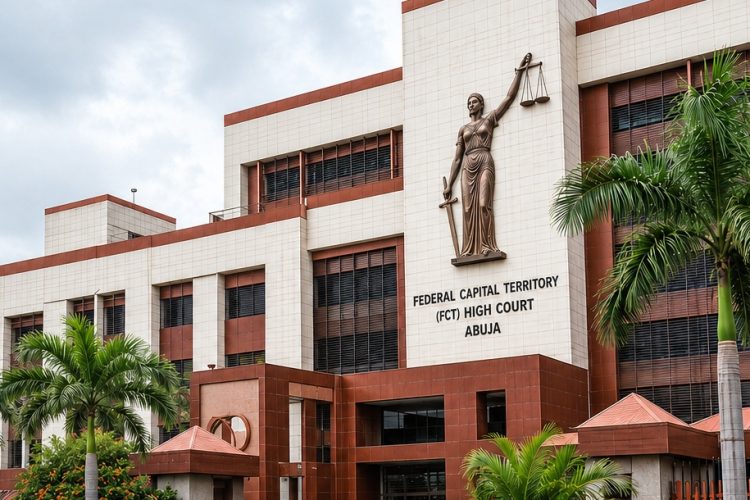
The Federal Capital Territory High Court, Maitama, has held the Economic and Financial Crimes Commission liable for defamation against former Minister of Power Olu Agunloye over a website and X publication on his arraignment, and awarded him ₦10 million in damages.
The Federal Capital Territory High Court, Maitama, has held the Economic and Financial Crimes Commission (EFCC) liable for defaming Olu Agunloye, a former Minister of Power, and awarded him ₦10 million in damages.
Justice Peter Kekemeke delivered judgment in a defamation suit filed by Agunloye against the EFCC over a publication on the commission’s official website and its X (formerly Twitter) account, headlined “EFCC arraigns Agunloye over $6billion fraud.” Agunloye had claimed ₦10 billion in damages.
The court held that the EFCC is an investigative agency and not a news agency, and found the publication false and defamatory. The court found that the commission had failed to establish the truth of the claims in the publication, and noted that the criminal charge filed against Agunloye did not contain an allegation of fraud. The court described the headline of the publication as “sensational.”
Justice Kekemeke ordered the EFCC to retract the publication and to apologise to Agunloye on its official website and in two national newspapers. The court further granted a perpetual injunction restraining the EFCC from further defamatory publications against him.
The criminal charge against Agunloye referenced in the EFCC’s original publication remains separate and pending; this judgment resolves the defamation claim only and does not determine his guilt or innocence in that matter. The status of that underlying criminal proceeding was not independently confirmed as at filing.
What the ruling turns on:
The court’s finding that the EFCC is “an investigative agency and not a news agency” goes to the standard the commission is held to when it makes public statements about persons under investigation. A news agency reporting on a criminal allegation can typically rely on privilege defences tied to fair and accurate reporting of proceedings, provided the report is balanced and attributed. An investigative agency issuing its own publication about a suspect does not automatically carry the same latitude: where it states or implies guilt, or asserts facts — such as the quantum or nature of an alleged fraud — that are not reflected in the actual charge before the court, it exposes itself to the ordinary rules of defamation like any other publisher. The court’s finding that the charge sheet did not include a fraud allegation, while the EFCC’s headline asserted “$6billion fraud,” goes to that gap between what was charged and what was published.
The relief ordered, and what each element does:
- Retraction: the EFCC is to withdraw the impugned publication from its website and X account.
- Apology: the commission is to publish an apology to Agunloye on its own website and in two national newspapers.
- Perpetual injunction: the EFCC is restrained from further defamatory publications against Agunloye; any future publication making similar unproven assertions could expose it to a fresh cause of action, including for contempt of the injunction itself.
Counsel for the EFCC, Dr Wahab Shittu, SAN, said the commission would appeal the judgment.
What happens next:
Dr Shittu’s indication that the EFCC will appeal means the judgment is not final. The ₦10 million damages award, the retraction and apology order, and the injunction remain subject to that appeal.