


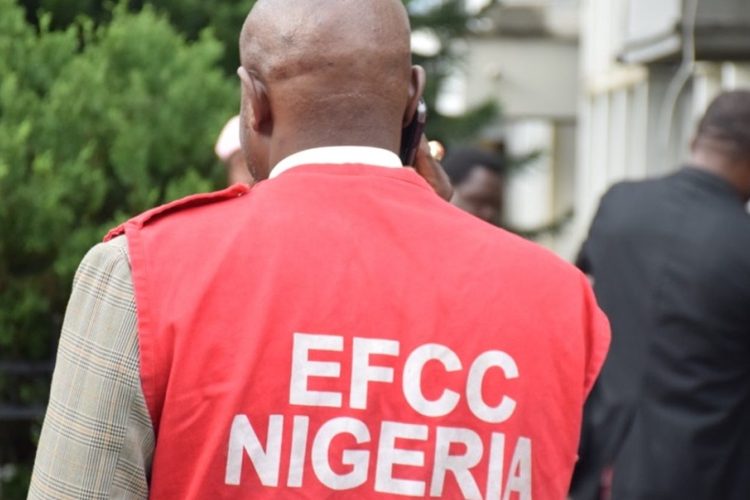
The Federal High Court, sitting in Jos, Plateau State, on Thursday, 29 May 2025, re-arraigned two executives of Covenant Fadama Multi-purpose Cooperative Society on multiple counts bordering on alleged investment-related offences.
The proceedings were presided over by Sharon Ishaya. The defendants, Bishop Katung Jonas (Chairman) and Okewole Dayo (Secretary), were re-arraigned on a 23-count charge filed by the Economic and Financial Crimes Commission.
According to the charge as read in court, the Commission alleged that the defendants were involved in transactions amounting to ₦178.8 million. Specific counts include allegations of transferring funds alleged to be proceeds of unlawful activity, contrary to provisions of the Money Laundering (Prohibition) Act, 2012, and obtaining funds by alleged false representations, contrary to the Advance Fee Fraud and Other Fraud-Related Offences Act, 2006.
Upon arraignment, both defendants entered pleas of not guilty to all the counts.
Federal High Court in Lagos Convicts Eight Foreign Nationals on Cybercrime Charges
Prosecution counsel, Ibrahim Buba, informed the court that the Commission was ready to commence trial and had lined up witnesses to testify. However, defence counsel J.J. Achi, appearing for the second defendant, applied for an adjournment, citing a family medical emergency. Counsel to the first defendant, C.I. Nwogbo, also requested an adjournment, stating that he had recently taken over the brief and had not been furnished with Certified True Copies of the case file.
In response, Justice Ishaya expressed concern over the delays, particularly noting that the prosecution team had travelled from Abuja for the sitting. The court was further informed by the prosecution that although 18 witnesses were initially listed, two had since died and others were no longer reachable, and that the Commission might review its witness list.
Following the submissions of counsel, the court adjourned the matter for continuation of trial.
What Next:
– Trial adjourned to 22 and 23 July 2025 for commencement of hearing.
– Prosecution expected to begin calling witnesses.
– Possible application by the prosecution to amend its witness list.